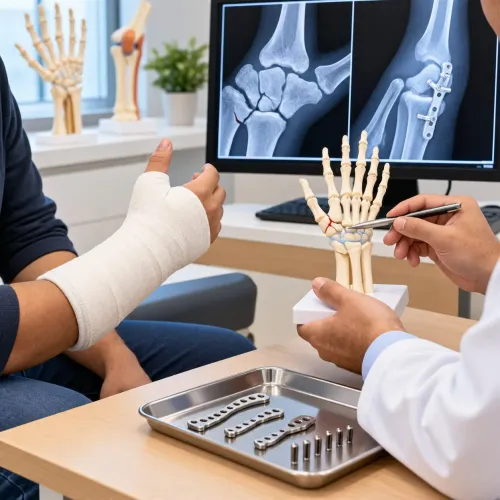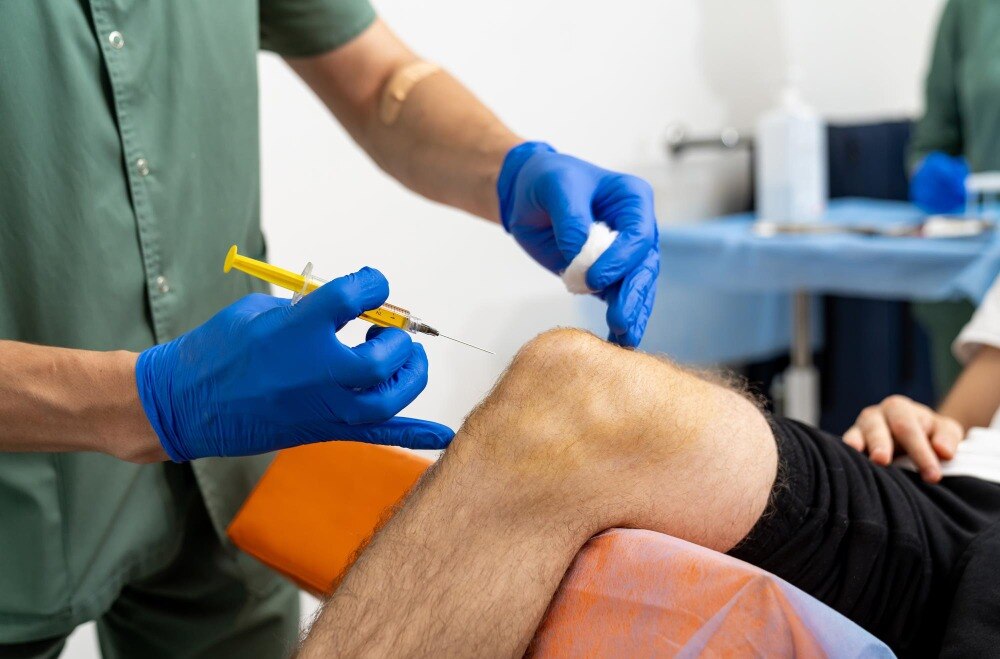
Knee pain can come from osteoarthritis, a meniscal tear, ligament damage, inflammatory disease, infection or pain referred from the hip or spine, so PRP is not a universal answer. By the end, you will know how PRP is prepared, what the appointment and recovery involve, who may fit the treatment, and which questions to ask before booking.
Key takeaways
- PRP uses your blood’s concentrated platelets, not a cartilage replacement.
- Ask how many injections are recommended and when normal activity can resume.
- PRP suits selected knee pain cases; realistic results focus on pain and function.
- Compare providers on diagnosis, sterile technique, imaging and follow-up care.
What is actually injected during PRP treatment for knee pain?
PRP means platelet-rich plasma: a portion of your own blood containing a higher concentration of platelets than ordinary plasma. Platelets release signalling proteins involved in inflammation and tissue repair, but PRP is not a proven cartilage-regrowth injection.
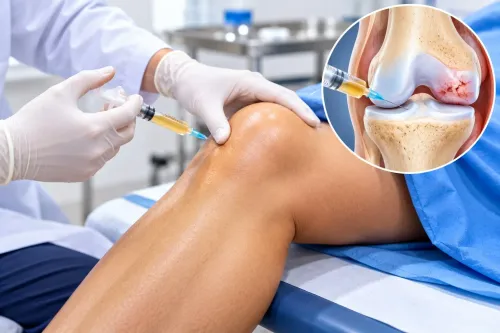
A clinician draws blood from your arm into a sterile tube, then spins it in a centrifuge. This separates red blood cells, platelet-containing plasma and other components. The clinician collects the selected plasma layer and injects that liquid into the knee; whole blood is not injected.
PRP is not one standardised product. Preparation differs in platelet concentration, white-cell content, red-cell contamination, activation method, volume and injection count.
| Preparation | What it contains | Practical implication |
|---|---|---|
| Leukocyte-poor PRP | Higher platelets with fewer white blood cells | Often selected when limiting short-term inflammatory soreness matters |
| Leukocyte-rich PRP | Higher platelets with more white blood cells | May produce more short-term pain; neither type is consistently superior for knee osteoarthritis |
| Variable PRP systems | Different platelet levels, volumes and red-cell carryover | Results from one study or clinic protocol may not apply to another |
Confirm the diagnosis before considering PRP for knee osteoarthritis. Osteoarthritis, a meniscal tear, ligament injury, inflammatory arthritis, referred hip or spine pain and infection need different assessments and treatments. Examination and appropriate imaging establish whether PRP addresses the actual source of your pain rather than treating an assumed “cartilage” problem.
What happens during a PRP knee appointment in Bengaluru?
Expect a consultation, knee examination, imaging review and injection in one planned visit. Allow about 45–90 minutes, depending on blood collection, PRP preparation and whether ultrasound guidance is used.
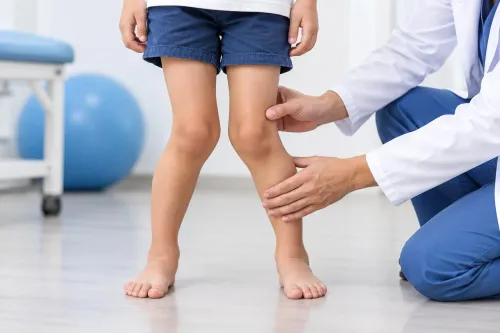
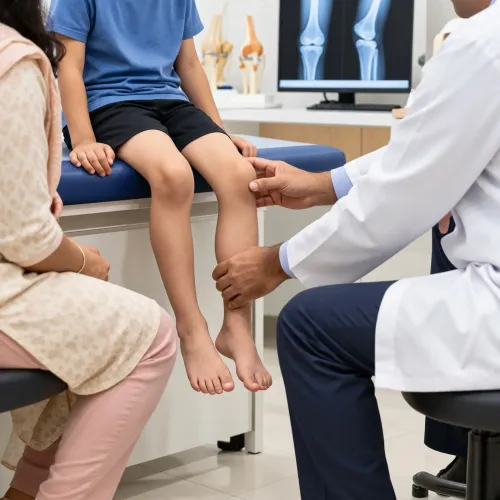
- Bring your X-rays or MRI reports and a current medication list. The clinician will check pain location, swelling, range of motion, alignment, stability and walking pattern, then confirm that the diagnosis fits PRP rather than a meniscal tear, ligament injury, hip or spine problem, inflammatory arthritis or infection.
- Ask what the imaging shows and where the injection will be placed. For knee osteoarthritis, the target is usually the joint space; ultrasound can help identify the target and guide the needle when clinically appropriate.
- Review consent before any procedure. It should cover expected soreness, infection or bleeding risk, alternatives, aftercare and the proposed PRP preparation.
- Blood is drawn from your arm, processed in a sterile system, and the prepared plasma is loaded into a syringe. Ask whether the product contains concentrated platelets, white cells or red cells, and whether it is activated.
- The skin is cleaned with an antiseptic, and local anaesthetic use is discussed because some products can affect platelet function. Ask specifically about ibuprofen, naproxen, aspirin, blood thinners, steroids and supplements; do not stop prescribed medication without medical advice.
- Confirm who performs the injection, whether ultrasound is planned, what the fee includes and when follow-up occurs.
If you are comparing a “prp injection knee in bengaluru” appointment, these details matter more than the advertised session count.
How many injections are needed, and when can you return to normal activity?
One injection is not automatically better than three: no universal PRP schedule exists for knee osteoarthritis. Trials have tested single injections and series, while platelet concentration, leukocyte content and diagnosis differ between protocols.
| Protocol | What it means | Interval and practical implication |
|---|---|---|
| One injection | A single treatment, followed by observation | Reassess after several weeks before deciding whether more treatment is justified |
| Two injections | Two planned treatments | The second may be proposed 1–4 weeks after the first, depending on the preparation and response |
| Three injections | A three-treatment course | Sessions may be spaced about 1–4 weeks apart; ask what evidence supports that exact schedule |
During the injection, you may feel a brief needle prick, pressure or aching as fluid enters the joint. Soreness and stiffness can increase for 1–3 days; use ice wrapped in cloth, reduce loading, and take only pain relief approved by your clinician. Ask before using ibuprofen, naproxen or other anti-inflammatory medicines.
Gentle walking is often resumed the same day or the next day if pain allows. Desk work may be possible within 1–2 days, but postpone running, jumping, heavy squats and strenuous exercise until soreness settles and your clinician clears progression.
Do not judge a prp injection for knee pain in bengaluru by immediate relief: symptom improvement can take 2–6 weeks, and mobility gains may continue over 6–12 weeks. Contact the clinic for fever, spreading redness, severe swelling or escalating pain.
Who is a reasonable candidate for PRP, and what results are realistic?
PRP is a reasonable option when examination and imaging confirm a pain-producing knee problem, especially mild-to-moderate osteoarthritis, and symptoms continue despite exercise-based rehabilitation, weight management or other non-operative care.
The diagnosis matters more than the phrase “knee cartilage prp treatment.” Knee pain can come from osteoarthritis, a meniscal tear, ligament injury, inflammatory arthritis, hip or spine disease, or infection. A locked knee can indicate a displaced meniscal tear or loose body; PRP will not remove the obstruction.
A clinician may defer or avoid PRP when you have:
- Active infection in the knee or around the injection site
- Significant bleeding risk, uncontrolled systemic illness or unsafe medication interactions
- Severe joint-space loss, major deformity, persistent night or rest pain, or substantial loss of daily function
Those findings require a discussion about structured non-operative care and, when appropriate, knee replacement.
Realistic goals are less pain and better walking, stair use or daily function over the following weeks or months. Results vary, and clinical studies have not established consistent cartilage regeneration. A pain improvement does not prove that damaged cartilage has regrown. Be cautious of guarantees of permanent relief, cartilage restoration or avoiding replacement.
Ask how your examination and scans support PRP, what outcome will be measured, and what happens if it fails. Depending on the diagnosis, established alternatives include physiotherapy, activity modification, medicines, injections other than PRP, arthroscopy for selected mechanical problems, or knee replacement. Do not stop anticoagulants or antiplatelet medicines without medical advice.
How should you compare a regenerative knee treatment provider?
Before booking a regenerative knee treatment near me, compare the clinical plan, not the word “regenerative.” Ask who will perform the injection and request a documented diagnosis, such as osteoarthritis, meniscal tear, ligament injury or inflammatory arthritis, with its severity and the reason PRP fits.
| Question to ask | What a useful answer includes | Warning sign |
|---|---|---|
| What product will you receive? | Blood volume, centrifuge or preparation method, injected volume, platelet concentration, leukocyte content, red-cell contamination and activation method | “PRP” is treated as one identical product |
| How will placement be confirmed? | Ultrasound guidance when clinically appropriate, with the injection target explained | No discussion of image guidance or anatomy |
| What happens after injection? | Written activity limits, pain-medication advice, rehabilitation exercises and a named follow-up date | Aftercare ends when you leave |
| What does the fee cover? | Consultation, blood draw, preparation, injection, imaging guidance, follow-up and complication management | A low headline price excludes key steps |
| What if there is no benefit? | Reassessment, review of the diagnosis and a clear alternative plan; no automatic repeat injection | More injections are sold without reassessment |
Ask whether the proposed one-, two- or three-injection schedule has a stated interval and evidence; no schedule is universal. You can evaluate Dr Harish Madrekar's Orthopaedic Clinic using these same questions, rather than its marketing label, and compare written answers across providers before choosing.
Related service
REGENERATIVE ORTHOPAEDICS PLATE RICH PLASMA IS INJECTED INTO YOUR KNEES FOR CARTILAGE REMODELLING View service → |
Frequently asked questions
What is injected during PRP treatment for knee pain?
A clinician injects platelet-rich plasma prepared from your own blood. It contains a higher platelet concentration than ordinary plasma and is not a proven cartilage-regrowth injection.
What happens during a PRP knee appointment in Bengaluru?
The appointment usually involves assessing your knee diagnosis and suitability, drawing blood, preparing the platelet-rich plasma, and injecting it into the planned knee area using sterile technique.
How many PRP knee injections are needed, and when can you return to normal activity?
The number of injections depends on your diagnosis and treatment plan. Ask the provider for a specific schedule and written activity guidance because return-to-activity timing varies by the injection site and your symptoms.
Who is a reasonable candidate for PRP for knee osteoarthritis?
A reasonable candidate is someone whose knee pain has been assessed and whose symptoms, diagnosis, goals and previous treatments fit PRP. Discuss realistic benefits, limitations and alternatives before proceeding.
Keywords