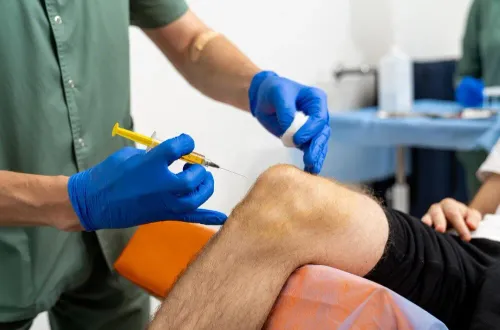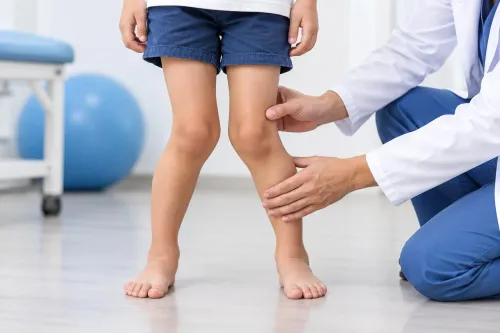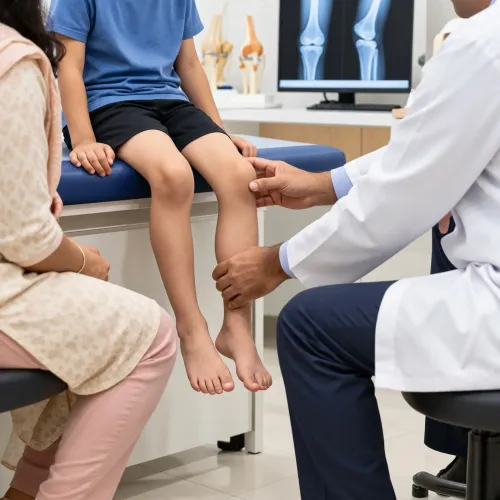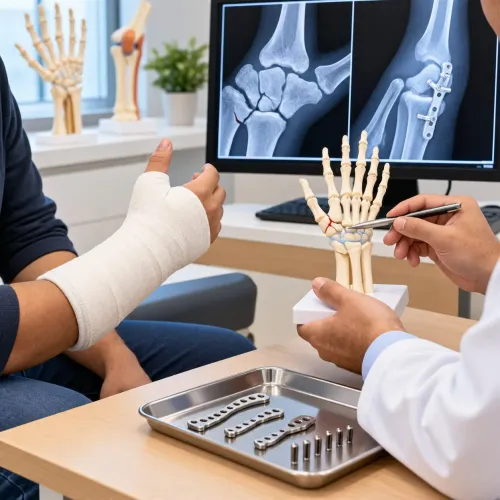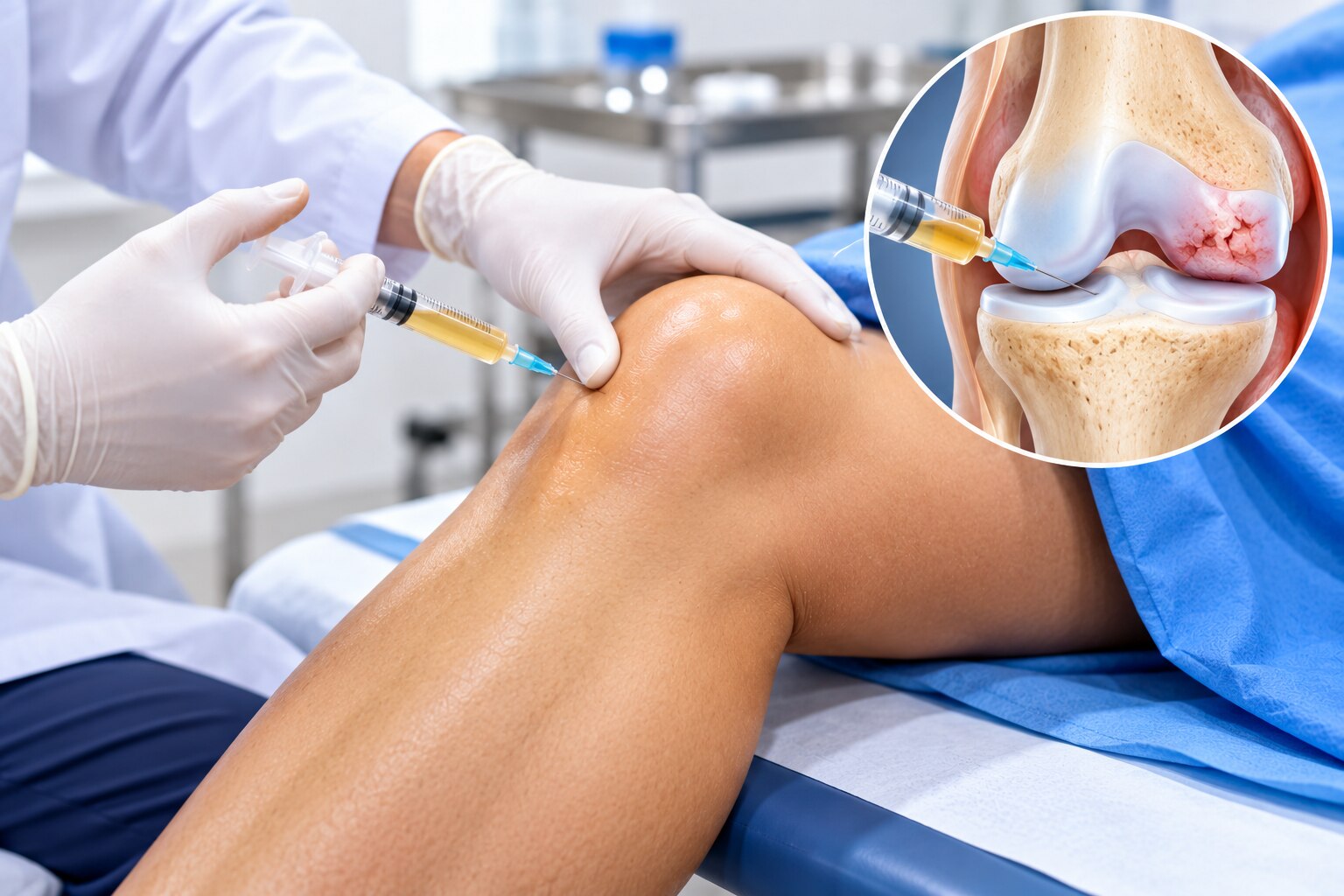
GFC injections are not suitable for every type or stage of knee cartilage damage. By checking your symptoms, X-rays, possible meniscus or ligament problems, medical history and treatment goals, you can distinguish a reasonable candidate from someone who needs rehabilitation, surgery or another diagnosis addressed first.
Key takeaways
- Adults with early-to-moderate osteoarthritis and persistent symptoms may be suitable.
- An examination and imaging must confirm cartilage-related pain before GFC treatment.
- Focal cartilage defects, meniscus tears and old ACL injuries need separate assessment.
- Compare GFC with rehabilitation, other injections and surgery before deciding.
The most suitable candidates have early-to-moderate joint damage and persistent symptoms
The best candidates are adults with early-to-moderate osteoarthritis, persistent knee pain and reduced function despite a proper trial of strengthening, activity modification, weight management where relevant, and safe pain relief.
For someone asking who is suitable for GFC knee injections in Bengaluru, eligibility depends on a confirmed pain source, realistic goals and willingness to continue rehabilitation.
GFC injection eligibility is stronger when you have:
- Pain lasting several weeks or longer that interferes with walking, stairs, work or exercise
- Mild-to-moderate joint-space narrowing, osteophytes or cartilage wear on standing knee X-rays
- Stable alignment and ligaments, without a major deformity or locked knee
- No uncontrolled bleeding disorder, active infection or untreated medical problem affecting healing
- A goal of reducing pain and improving function, rather than instant relief before a fixed deadline
| Knee condition | What it means | How GFC fits |
|---|---|---|
| Early osteoarthritis | Cartilage wear with preserved joint space and limited structural change | A reasonable option to discuss alongside exercise-based care |
| Moderate osteoarthritis | Clear narrowing, stiffness and activity-related pain, but some joint space remains | May suit selected patients after examination and non-operative treatment |
| Advanced bone-on-bone disease | Near-complete joint-space loss, marked deformity, severe stiffness or persistent rest pain | Evidence is less persuasive; GFC cannot restore alignment or reliably rebuild lost cartilage, so surgical options deserve discussion |
Age alone does not decide suitability. A clinician should review your walking limitation, blood health, medicines and previous treatments before recommending an injection.
Your examination and imaging determine whether cartilage is the real pain source
Knee pain is not proof that worn cartilage is causing the pain. Before considering a gfc injection knee in bengaluru, an orthopaedic clinician should match your symptoms with examination findings and images, then explain what the injection can and cannot achieve.
1. Record the symptom pattern: duration, swelling, locking, giving way, walking distance, stairs, night pain and response to exercise or medicines. Pain focused at the joint line, kneecap or back of the knee points to different causes.
2. Examine alignment while standing and walking, knee range of motion, tenderness, swelling, quadriceps strength, ligament stability and meniscal signs. Hip and spine assessment matters because pain from either area can feel like knee pain.
3. Obtain standing, weight-bearing knee radiographs when osteoarthritis is suspected. Ask to review the images for joint-space narrowing, osteophytes, alignment changes and bone-on-bone loss; these findings help distinguish early or moderate disease from advanced grade-IV arthritis.
4. Use MRI when symptoms suggest a focal cartilage or osteochondral defect, meniscus tear, old ACL injury, unexplained swelling or a diagnosis that would change treatment. MRI is not automatically needed for typical osteoarthritis already supported by examination and weight-bearing X-rays.
An injection should follow a diagnosis, not replace one. If the proposed GFC treatment is expensive, request the written imaging interpretation, the exact blood-processing protocol and a rehabilitation plan; seek a second opinion if these are absent. Pain relief does not prove that lost cartilage has regrown.
Pain from a focal defect, meniscus or old ACL injury needs a different assessment
A traumatic focal cartilage defect can be considered for GFC only after its size, depth and location are established. GFC treatment for knee cartilage may reduce pain in selected cases, but it cannot reliably reattach a loose fragment, restore a missing cartilage section or correct an abnormal joint surface.
An osteochondral fragment or loose body needs separate treatment.
Chondromalacia patella often reflects patellar tracking, quadriceps weakness or overload rather than isolated joint-wide arthritis. Structured rehabilitation usually comes first. Meniscus-related pain needs assessment for a tear, extrusion or mechanical symptoms; an unstable or displaced tear may need treatment before any injection.
An old ACL injury requires an instability assessment because an injection cannot restore ligament control.
Treat or clarify these problems first when you have:
- A locked knee or a suspected loose osteochondral fragment
- Repeated giving-way from ACL deficiency
- A displaced meniscus tear causing catching or restricted movement
- A recent injury with suspected fracture, major swelling or inability to bear weight
MRI is useful when these findings could change management; it is not automatic before every injection. Ask which structure is causing your pain, what the scan shows, and why GFC is preferable to rehabilitation or corrective treatment.
Also request the exact blood-processing protocol, since GFC products differ in platelet concentration, white-cell content, activation method and injection schedule.
Medical history, previous treatment and treatment goals affect eligibility
Persistent knee symptoms after an appropriate non-operative trial strengthen GFC injection eligibility. That trial usually includes exercise-based strengthening, weight management when relevant, activity modification, and pain or anti-inflammatory medicine when safe. An injection complements rehabilitation; it does not replace it.
These details change the decision:
- Symptom duration: pain lasting several weeks or months deserves a diagnosis; sudden severe pain needs assessment for injury, infection or another cause.
- Pain and walking: mild-to-moderate pain with reduced stairs, standing or walking fits better than constant severe pain, marked limping or rest pain from advanced bone-on-bone disease.
- Age: there is no useful age cut-off. Joint damage, general health, expectations and surgical alternatives matter more than the number of years lived.
- Activity goal: gradual return to walking, exercise or daily tasks is realistic. Immediate relief before a fixed deadline is a poor match because response varies.
- Blood health: active infection, uncontrolled diabetes, immune problems, platelet or clotting disorders and significant anaemia require medical review before drawing or injecting blood products.
- Medicines: report anticoagulants, antiplatelet drugs, anti-inflammatory medicines and recent steroid injections. Do not stop any medicine without the prescribing clinician’s instruction.
- Previous care: document what you tried, for how long and what changed. Failure to improve despite a structured programme supports discussion, not an automatic injection.
The diagnosis must remain clear, and you should understand that GFC has no guaranteed cartilage-restoring effect. Ask for the preparation protocol, risks, alternatives and rehabilitation plan before deciding.
Compare GFC with rehabilitation, other injections and surgery before deciding
GFC is an adjunct, not a cartilage replacement. It may reduce pain and improve function, but relief does not prove that new cartilage formed or that knee replacement will be avoided. Compare GFC treatment for knee cartilage with options that improve strength, reduce load, control inflammation or correct mechanical damage.
| Option | Realistic benefit | Limitation or role |
|---|---|---|
| GFC | May reduce pain and improve function; does not reliably rebuild cartilage. | Use alongside rehabilitation; preparation varies by clinic. |
| PRP | Another blood-derived injection with variable outcomes. | Not interchangeable with GFC; compare the exact protocol. |
| Corticosteroid | Faster short-term relief from inflammation. | Does not repair cartilage; repeated injections need caution. |
| Hyaluronic acid | Can provide symptom relief for some knees. | Results are inconsistent and it does not restore cartilage. |
| Physiotherapy | Builds strength, movement and load tolerance. | Requires regular effort but remains foundational. |
| Weight reduction | Reduces knee loading when excess weight contributes. | Gradual benefit, not instant pain relief. |
| Bracing | Can unload one compartment or support instability. | The diagnosis and brace fit must match. |
| Knee replacement | Replaces a severely damaged joint and improves function. | Major surgery for advanced disease, not early symptoms. |
Before booking a gfc injection knee in Bengaluru, ask:
- What blood-processing protocol, platelet and leukocyte levels, activation method, volume and number of injections will you use?
- Do my standing X-rays show a treatable problem, and would MRI change the plan?
- What rehabilitation schedule, outcome measure and review date will follow treatment?
- What alternatives, total cost and stopping criteria apply if pain persists?
Dr Harish Madrekar's Orthopaedic Clinic should explain these choices without presenting GFC as a substitute for treating instability, malalignment, meniscal damage or bone-on-bone arthritis.
Related service
GFC GFC INJ FOR OSTEOARTHRITIS KNEE Growth Factor Concentrate (GFC) injection is an advanced regenerative treatment used for early to moderate knee osteoarthritis. View service → |
Frequently asked questions
Who is suitable for GFC knee injections in Bengaluru?
Adults with early-to-moderate osteoarthritis, persistent knee symptoms and reduced function despite appropriate non-surgical treatment may be candidates. An orthopaedic assessment must confirm suitability.
How do examination and imaging determine GFC injection eligibility?
Your clinician assesses alignment, movement, stability, tenderness and strength, then reviews imaging such as weight-bearing X-rays or MRI when needed to identify the pain source.
Can GFC treat pain from a meniscus tear, focal cartilage defect or old ACL injury?
These conditions need a separate assessment because the pain may not come from general cartilage wear. Treatment may focus on the meniscus, ligament, focal defect or joint instability.
What should you compare before choosing GFC treatment for knee cartilage?
Compare supervised rehabilitation, activity changes, weight management where relevant, pain relief, other injections and surgery based on your diagnosis, previous treatment and goals.
Keywords