An ACL tear on an MRI is not, by itself, a decision to have surgery. The stronger question is whether your knee repeatedly gives way, what activities you need to resume, whether other structures are damaged, and whether a properly supervised rehabilitation programme has restored useful stability.
Key takeaways
- Arrange an ACL assessment for repeated giving-way, swelling, or lost knee extension.
- Rehabilitation may suit stable knees without recurrent buckling or demanding pivoting activities.
- Tear pattern, knee examination, activity goals, and scans shape the treatment decision.
- Reconstruction becomes practical when instability persists despite structured rehabilitation.
Which symptoms mean you need an ACL assessment soon?
Repeated giving-way is the clearest reason to arrange an ACL assessment soon. If your knee buckles during pivoting, cutting, landing, sudden braking or uneven-ground walking, do not judge the injury by pain alone. Persistent swelling, loss of full extension, reduced confidence on stairs, or inability to return to sport also justify review.
These symptoms make “do I need ACL reconstruction in Bengaluru” a clinical question, not an MRI-only decision.
| Finding | What it suggests | Action |
|---|---|---|
| Repeated giving-way | Functional instability that can injure the meniscus or cartilage | Book an ACL assessment soon |
| Pivoting or landing causes buckling | The knee may be unreliable for sport or physical work | Stop those movements and arrange review |
| Swelling that persists or keeps returning | Ongoing joint irritation or associated injury | Seek assessment soon |
| Knee locked or unable to fully extend | Displaced meniscal tear, loose fragment or major injury | Seek urgent care |
| Rapidly increasing swelling or gross deformity | Fracture or substantial ligament damage | Seek urgent care immediately |
| Cold, numb or weak foot | Possible blood-vessel or nerve compromise | Go to emergency care now |
An MRI showing an ACL tear does not automatically mean reconstruction. Examination findings, activity goals, associated meniscus or cartilage damage and repeated instability determine the next step; a stable knee with a partial tear and modest activity demands may suit structured rehabilitation instead. An urgent warning sign needs faster care than a routine sports-injury appointment.
When is rehabilitation a reasonable alternative to reconstruction?
Rehabilitation is a reasonable ACL injury treatment in Bengaluru when your knee remains stable during daily activities and the activities you want to resume. This approach suits many people with a partial tear, modest activity demands and no recurrent giving-way; an MRI tear alone does not make reconstruction necessary.
A structured nonoperative plan includes:
- Restoring full knee extension and controlling swelling early.
- Progressively strengthening the quadriceps, hamstrings and hip muscles.
- Adding neuromuscular and proprioceptive exercises to improve balance and landing control.
- Modifying activity by avoiding pivoting, sudden direction changes and risky sport while maintaining safe conditioning.
- Using a brace for support during selected activities when your clinician recommends it.
Rehabilitation is not the same as waiting for the ligament to heal without supervision. A brace cannot correct every unstable knee, and returning to pivoting sport before strength and control recover can trigger another giving-way episode.
Persistent instability makes nonoperative care less suitable. If your knee repeatedly buckles during sport, work or ordinary movements, or remains unstable despite structured physiotherapy, discuss reconstruction. An associated meniscus or cartilage injury that needs repair also changes the decision, because rehabilitation alone may not address the full problem.
The KANON trial found similar patient-reported outcomes at two years for structured rehabilitation with optional delayed reconstruction and immediate reconstruction, although some rehabilitation-first participants later needed surgery. Your symptoms, examination, activity goals and response to therapy matter more than the scan label.
How do the tear pattern, examination and scans change the decision?
A complete ACL rupture with repeated giving-way creates a stronger case for reconstruction than an MRI finding alone. A partial tear with a stable knee, or a stretched but continuous ligament, can suit structured rehabilitation when your activities do not demand frequent pivoting.
The tear pattern changes the starting point:
- Complete rupture: discuss reconstruction more seriously if Lachman or pivot-shift testing shows instability.
- Partial tear: consider rehabilitation when strength and control return without recurrent giving-way.
- Stretched ligament: symptoms and examination matter more than the word “sprain” on the report.
- Associated injury: a repairable meniscus tear, cartilage defect, fracture or injury to the medial collateral, lateral collateral or posterior cruciate ligament can alter timing and treatment.
X-rays and MRI answer different questions:
| Imaging | What it can show | What it cannot decide |
|---|---|---|
| X-ray | Fracture, bone alignment, arthritis and some growth-plate problems | Whether an ACL reconstruction will improve your function |
| MRI | ACL continuity, partial or complete tearing, meniscus, cartilage, bone bruising and other ligament damage | Whether your instability, goals and rehabilitation response justify surgery |
| Examination | Lachman and pivot-shift findings, swelling, motion, gait and strength | The internal tissue detail shown by MRI |
The practical question is not only “do i need acl reconstruction in bengaluru?” It is whether your knee repeatedly fails during the activities you need, despite appropriate rehabilitation. Imaging confirms anatomy; your symptoms, examination and goals determine the recommendation.
What happens during an ACL surgery consultation in Bengaluru?
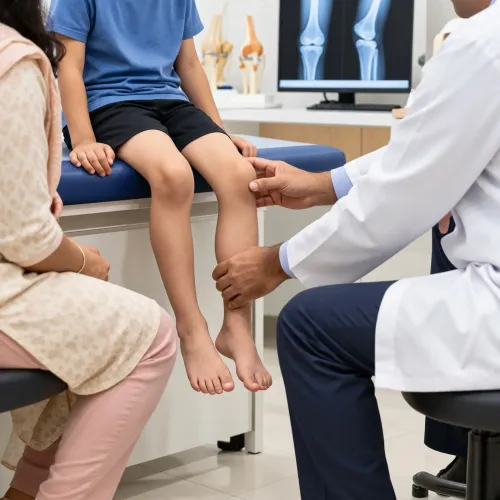
Expect a decision-focused assessment, not an automatic operation recommendation, during an ACL surgery consultation in Bengaluru. The clinician will ask how the injury happened, whether your knee has buckled since, which activities trigger instability, and what treatment or physiotherapy you have already tried.
The examination should cover:
- Your walking pattern, alignment and ability to bear weight.
- Swelling, tenderness, muscle wasting and both knees’ range of motion, especially full extension.
- Lachman and pivot-shift tests for forward movement and rotational instability.
- Meniscus and other ligament checks, including the medial collateral and posterolateral structures.
- Quadriceps and hamstring strength, balance and single-leg control.
- X-ray and MRI review. MRI can show ACL damage plus meniscus, cartilage, bone-bruising or additional ligament injuries, but a scan alone does not decide on reconstruction.
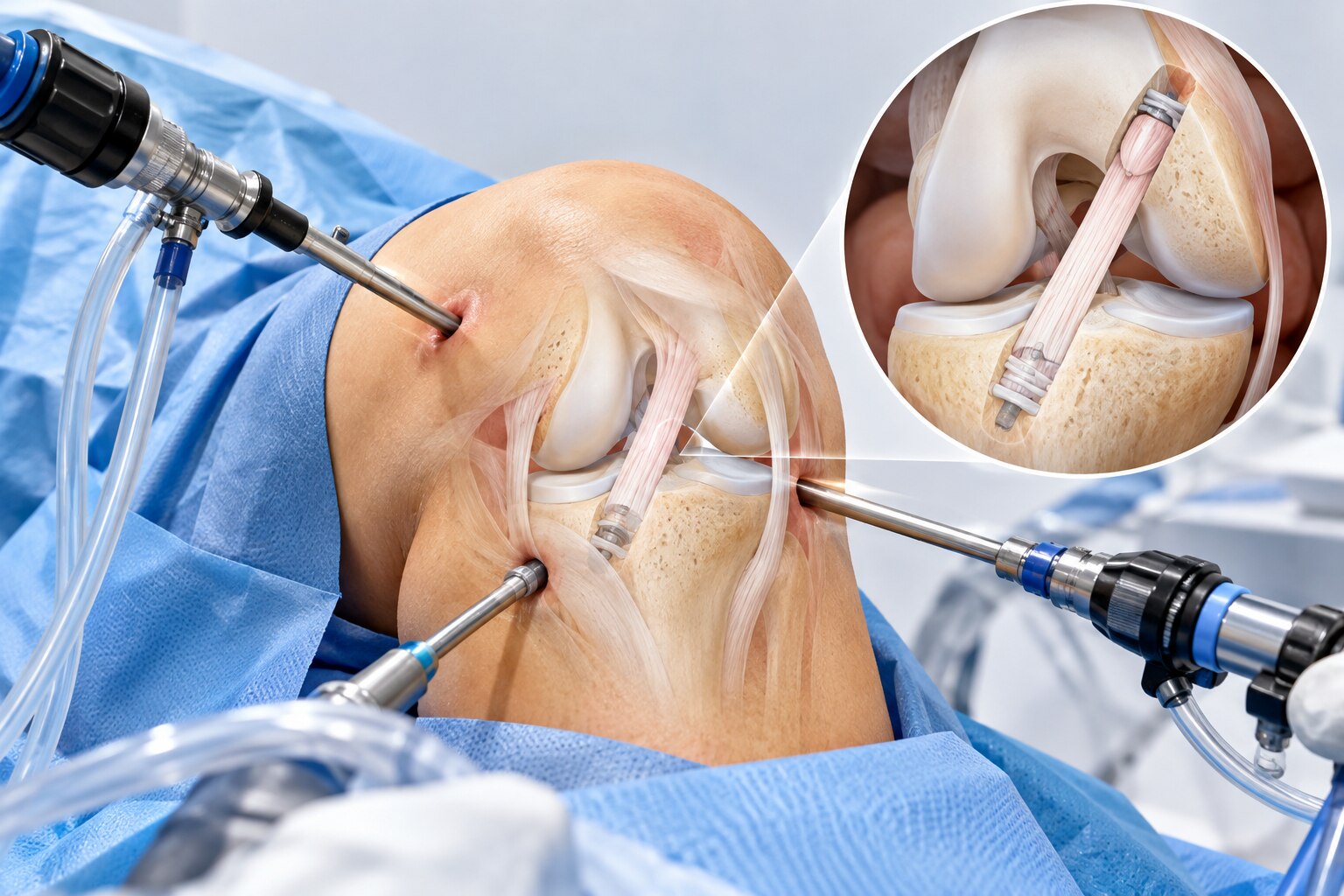
Ask the ACL reconstruction specialist in Bengaluru who will perform the operation, why a bone–patellar tendon–bone, hamstring, quadriceps-tendon or donor graft suits your age, sport, work and kneeling needs, and what fixation method is planned.
Also ask how associated meniscus or cartilage damage will be treated, who will supervise rehabilitation, and which strength, movement and hop-test criteria govern return to sport or heavy work.
Dr Harish Madrekar's Orthopaedic Clinic is one local setting where you can use these questions to keep the assessment centred on knee stability, activity goals and rehabilitation readiness rather than an MRI finding alone.
Related service
Knee Arthroscopy ACL Reconstruction for ACL injury ₹700 ACL Injury The Anterior Cruciate Ligament (ACL) is one of the major ligaments in the knee that helps maintain stability during walking, running,... View service → |
When does reconstruction become the more practical choice?
Reconstruction becomes the more practical choice when the knee repeatedly gives way despite structured rehabilitation, especially during pivoting, cutting, landing or sudden deceleration. Pain alone is not the deciding symptom; recurrent instability is.
- You want to return to football, badminton, basketball, skiing or another pivoting sport.
- Your job involves climbing, carrying loads, kneeling, uneven ground or rapid direction changes.
- Giving-way episodes continue after physiotherapy, strength training, activity modification or bracing.
- The ACL tear accompanies a repairable meniscus injury, cartilage damage, or another ligament injury that needs a stable knee.
Prehabilitation still matters. Regaining full extension, reducing swelling and building quadriceps strength before surgery can make early recovery easier. Surgery is rarely an emergency; timing depends on motion, swelling, associated injuries and your work or sport calendar. A locked knee or injury requiring prompt meniscus treatment changes that discussion.
Expect months of supervised rehabilitation, progressive strength and movement retraining, and objective testing before sport or heavy work. “It feels good” is not enough if strength, hop performance or neuromuscular control remains deficient.
Discuss infection, blood clots, nerve or blood-vessel injury, stiffness, weakness, graft failure, recurrent instability and harvest-site pain with an ACL reconstruction specialist in Bengaluru. Ask which graft and fixation method fit your age, sport, occupation and kneeling needs, and who will supervise rehabilitation.
Reconstruction stabilises the knee; it does not replace damaged cartilage, guarantee painless movement or prevent future arthritis. Recognised meniscus or cartilage disease can still cause symptoms after a technically successful operation.
Frequently asked questions
Which symptoms mean I need an ACL assessment soon?
Arrange an assessment if your knee repeatedly gives way during pivoting, landing, braking, stairs, or uneven-ground walking. Persistent swelling, lost full extension, reduced confidence, or inability to return to sport also justify review.
When is rehabilitation a reasonable alternative to ACL reconstruction?
Rehabilitation is reasonable when the knee remains functionally stable, you do not experience recurrent buckling, and your activity goals do not require frequent pivoting, cutting, or sudden direction changes.
How do the tear pattern, examination, and scans affect the decision?
The clinician combines your injury history with tests for looseness, range of motion, strength, alignment, and knee control. MRI findings show the ACL tear pattern and associated meniscus, cartilage, bone, or ligament injuries, while activity goals help determine treatment.
What happens during an ACL surgery consultation in Bengaluru?
The consultation usually covers how the injury occurred, episodes of giving-way, swelling, work and sport demands, previous treatment, knee examination, and review of X-rays or MRI scans. You can ask about rehabilitation, surgical timing, graft options, recovery demands, and risks.
When does ACL reconstruction become the more practical choice?
Reconstruction becomes more practical when instability continues, structured rehabilitation has not restored reliable function, or your work or sport requires repeated pivoting and cutting. Associated meniscus or ligament injuries can also influence the recommendation.
Keywords